Information Governance
Creating Trust in Information and Confidence in Decision-Making.
Our Approach
Information is one of an organisation's most valuable assets, but without clear governance, its value can be difficult to realise.
Effective information governance establishes the frameworks, policies, roles, and responsibilities required to manage information consistently, responsibly, and strategically. It provides the foundation for informed decision-making, accountability, compliance, and organisational resilience.
At Ahotahi, we help organisations develop practical governance approaches that align information management with business objectives, regulatory obligations, and community expectations.

How We Help.
Information governance frameworks
Governance operating models
Policies, standards, and procedures
Information ownership and stewardship models
Governance maturity assessments
Risk and compliance reviews
Information strategy development
Governance capability uplift
Outcomes
✅ Greater confidence in organisational information
✅ Improved accountability and decision-making
✅ Reduced information-related risk
✅ Clear ownership and stewardship responsibilities
✅ Governance practices that support long-term success
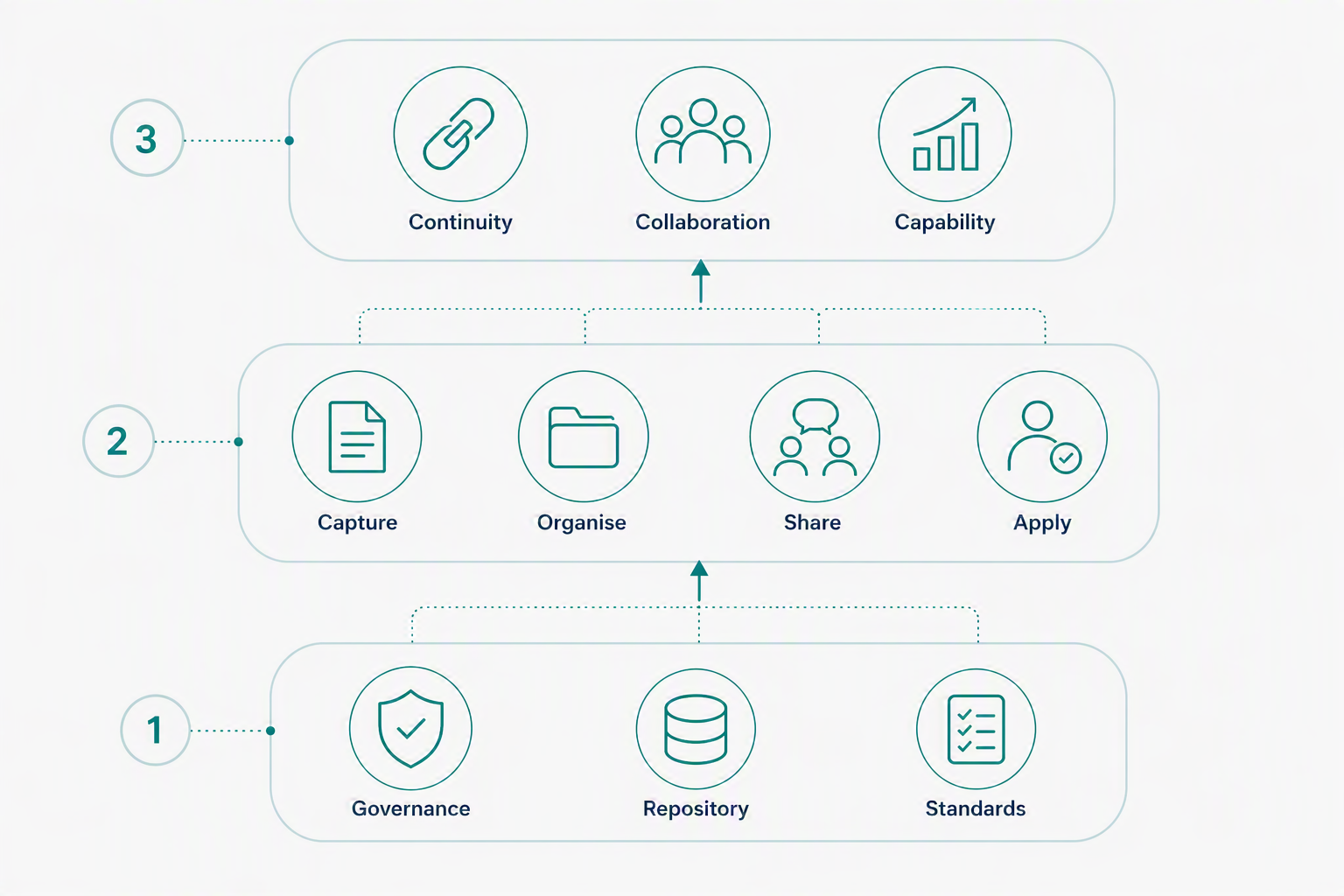
Knowledge Management.
Turning Organisational Knowledge into Organisational Capability
Knowledge is often one of an organisation's most underutilised assets. Valuable experience, lessons learned, expertise, and institutional knowledge can easily be lost when it is not captured, shared, and embedded effectively.
Knowledge management helps organisations retain critical knowledge, improve collaboration, accelerate learning, and build capability for the future.
We work with organisations to create knowledge-sharing cultures, processes, and systems that ensure valuable insights remain accessible and continue to create value over time.
How We Help
Knowledge management strategy
Lessons learned frameworks
Knowledge capture and transfer
Communities of practice
Knowledge-sharing programmes
Collaborative information environments
Knowledge repositories and governance
Capability development and training
Digital workplace and collaboration advisory
Outcomes
✅ Reduced loss of critical knowledge
✅ Stronger organisational capability
✅ Enhanced collaboration and learning
✅ Improved service delivery and performance
✅ Greater resilience through knowledge continuity
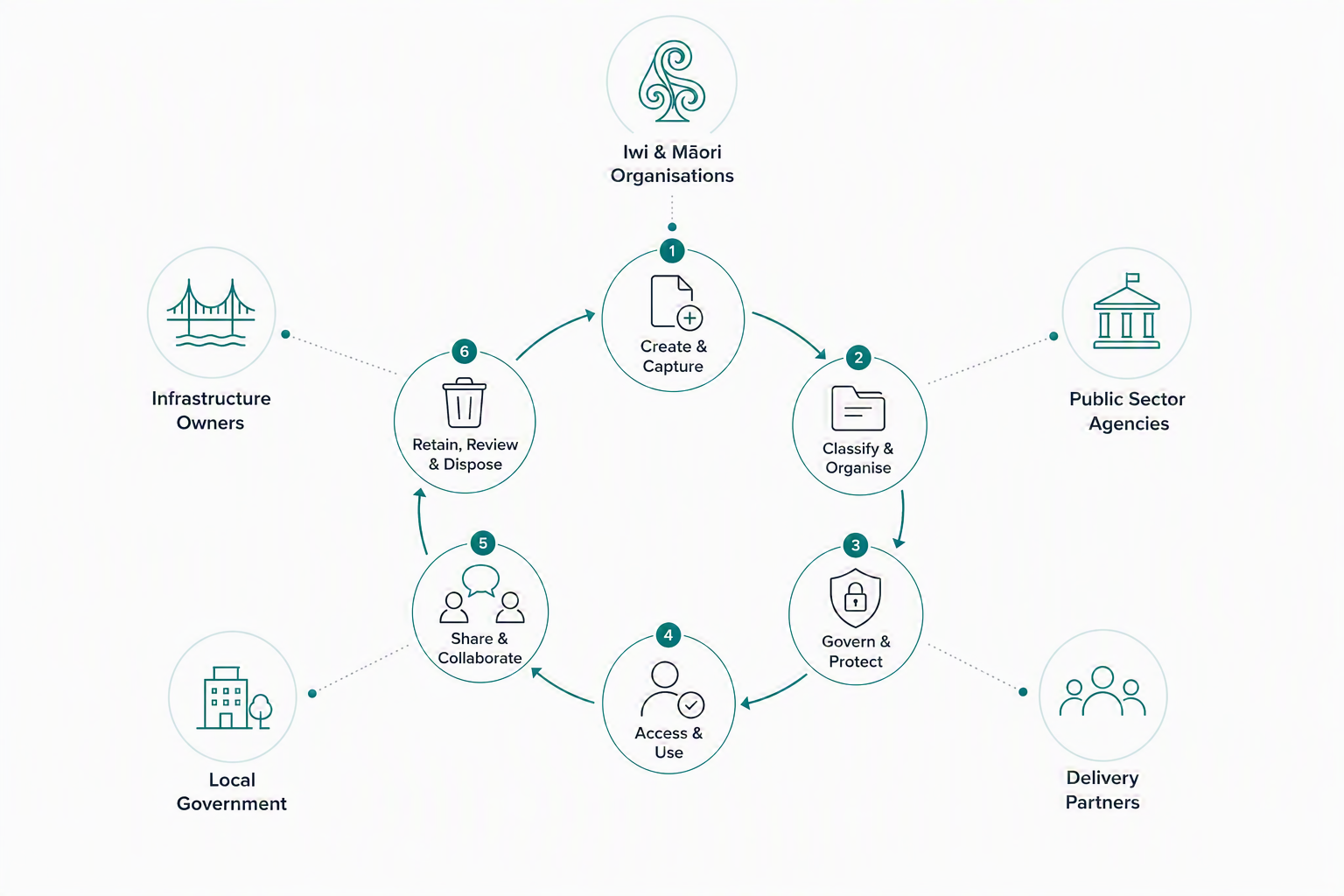
Information Management.
Managing Information Throughout Its Lifecycle
Organisations create and receive vast amounts of information every day. Without effective management, information becomes difficult to find, difficult to trust, and increasingly costly to maintain.
We help organisations establish practical records and information management practices that improve accessibility, compliance, efficiency, and long-term information stewardship.
Our approach balances governance requirements with operational needs, creating systems and processes that work in practice while supporting regulatory and organisational obligations.
How We Help
Records management frameworks
Information architecture and taxonomy
File plan and classification design
Retention and disposal schedules
Digital records management
Information lifecycle management
Compliance and audit readiness
Microsoft 365 information governance
Information audits and assessments
Outcomes
✅ Information that is easier to find and use
✅ Reduced duplication and information silos
✅ Improved compliance and accountability
✅ Better management of organisational knowledge
✅ Sustainable information management practices